
Nature needs skilled hands
Accredited learnerships, internships and practical short courses for people who want to work on the land, and for the employers and organisations who need trained teams.
For young people starting out
Three routes in, depending on where you are. You do not need conservation experience to start, and you do not need to have been to university.
Learnerships
A full year combining classroom theory with work on reserves and conservation sites. Five weeks are contact training and the rest is logged in a workbook whilst you work. You earn a stipend while you qualify.
Two qualifications: the National Certificate in Nature Conservation: Resource Guardianship at NQF2, and the Further Education and Training Certificate in Natural Resource Guardianship: Terrestrial at NQF4.
Who it suits: school leavers and unemployed young people with a Grade 12 certificate, and employed people who need a formal qualification behind the work they already do.
Internships and placements
Twelve months of real work in conservation, environmental education and skills development, with a mentor alongside you throughout.
You get fieldwork, community engagement and project management, and you leave with a network as well as experience. Several past interns are now permanent staff.
Who it suits: graduates, and students who need a work-integrated learning year to complete a qualification.
Short courses
Single skills you can add one at a time, taught in the field. Most run over one to three days, and they stack towards the work you want.
Who it suits: anyone building towards field work, and people already working who need a specific competency signed off.
See the full course list
One form covers learnerships, internships and placements. It takes about ten minutes. Have your ID number and highest qualification to hand. We come back to every applicant, whether or not there is a place open at the time.
Where the pathway usually breaks
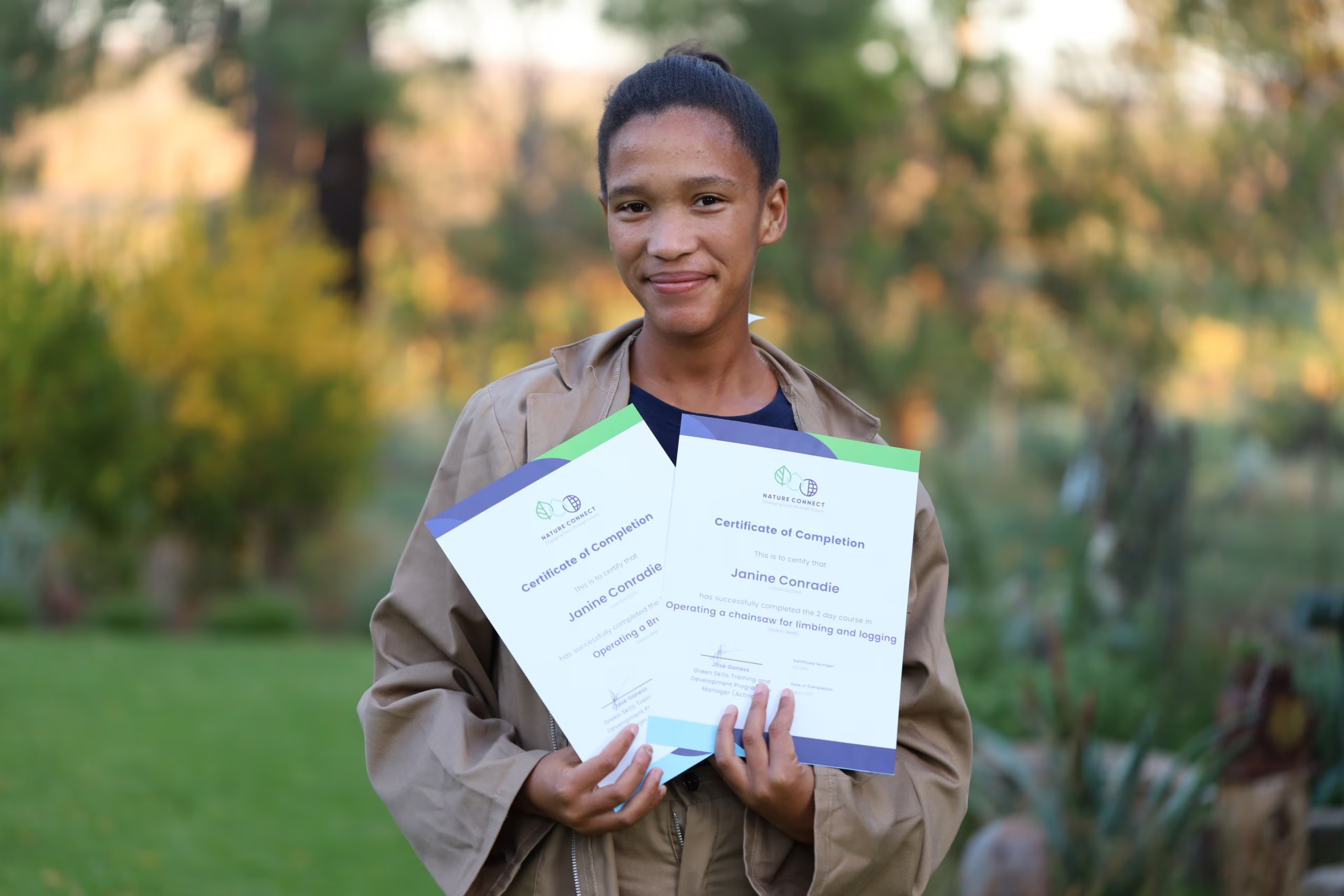
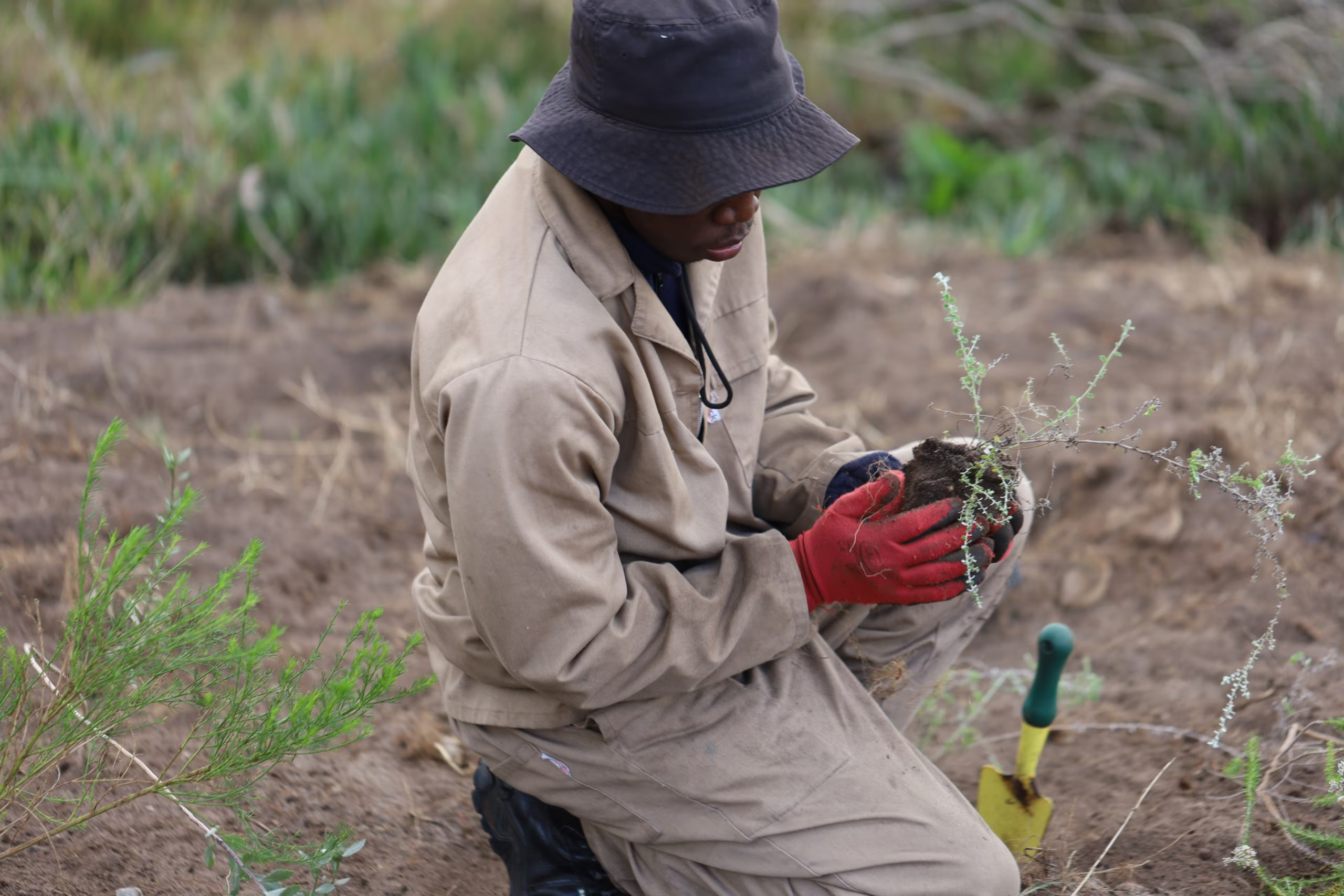
The obstacles rarely concern ability. Host reserves have limited capacity and few mentors, students in remote placements fund their own transport and accommodation, and many cannot afford boots.
One challenge came into sharp focus this year. Across South Africa, conservation students struggle to complete their work-integrated learning year, the final requirement before graduating, and they fall at the last hurdle for reasons that have nothing to do with how good they are.
Through partnerships that set aside land, funding, or both, we create mentored placements where emerging conservators build practical skills and the confidence to use them.
Twenty-five years of this work has taught us that young people succeed when skills are matched with mentorship and with people who understand their circumstances.
The ceiling on this work is not the number of young people who want a placement. It is the number of receptor sites willing to host and mentor one, which is why each new landowner agreement matters more than it looks.
“I honestly don’t think I could have reached this point without the support, guidance and encouragement I received.”
Lifa Nkosi · work-integrated learning placement
Placed at Kenilworth Racecourse Conservation Area, one of the sites we co-manage inside the metro.
“Universities can only do so much in the classroom. They rely heavily on conservation organisations to prepare students physically, mentally and professionally for the realities of the sector.”
Prof Frans G.T. Radloff · Cape Peninsula University of Technology
We hold advisory positions on nature conservation qualification committees at CPUT and the University of South Africa.
Ten years on
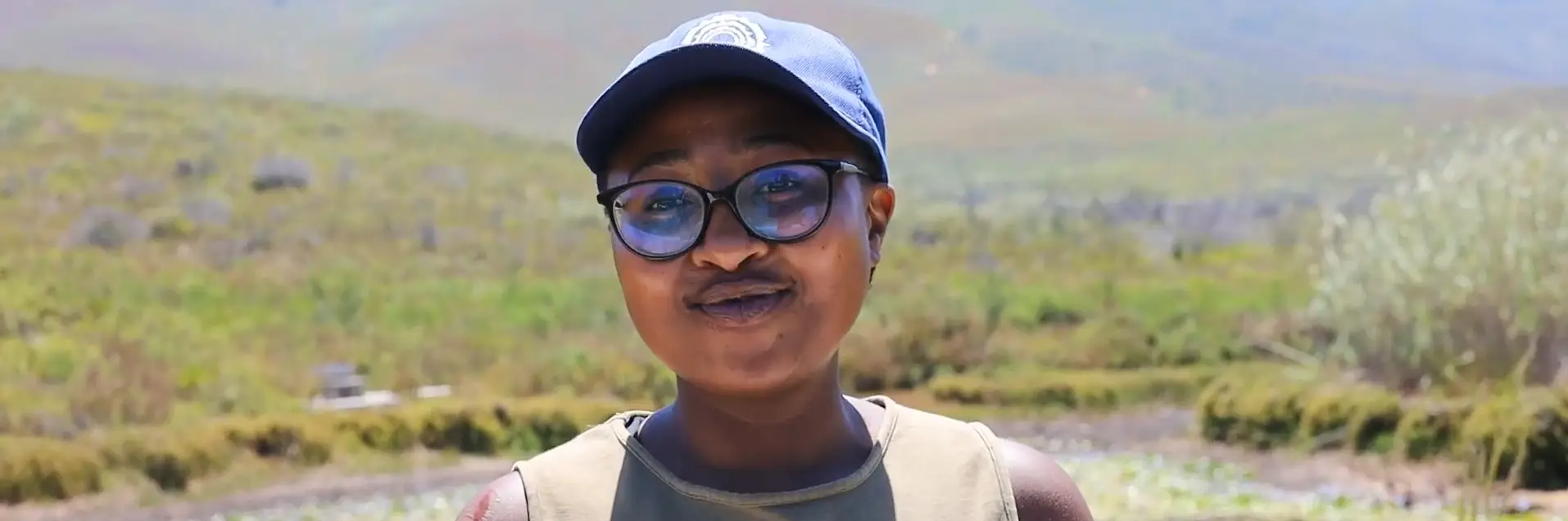
“These trainings helped me a lot. I was able to apply for the current position I’m in, the field ranger position, because these are also requirements within the role.”
Vuyokazi Rubushe, learnership 2015
In 2015, Vuyokazi Rubushe had a Grade 12 certificate and no route into conservation work. That changed when she joined our learnership, spending mornings in theory at the Nature College in Riversdale and afternoons at the reserve, in practice.
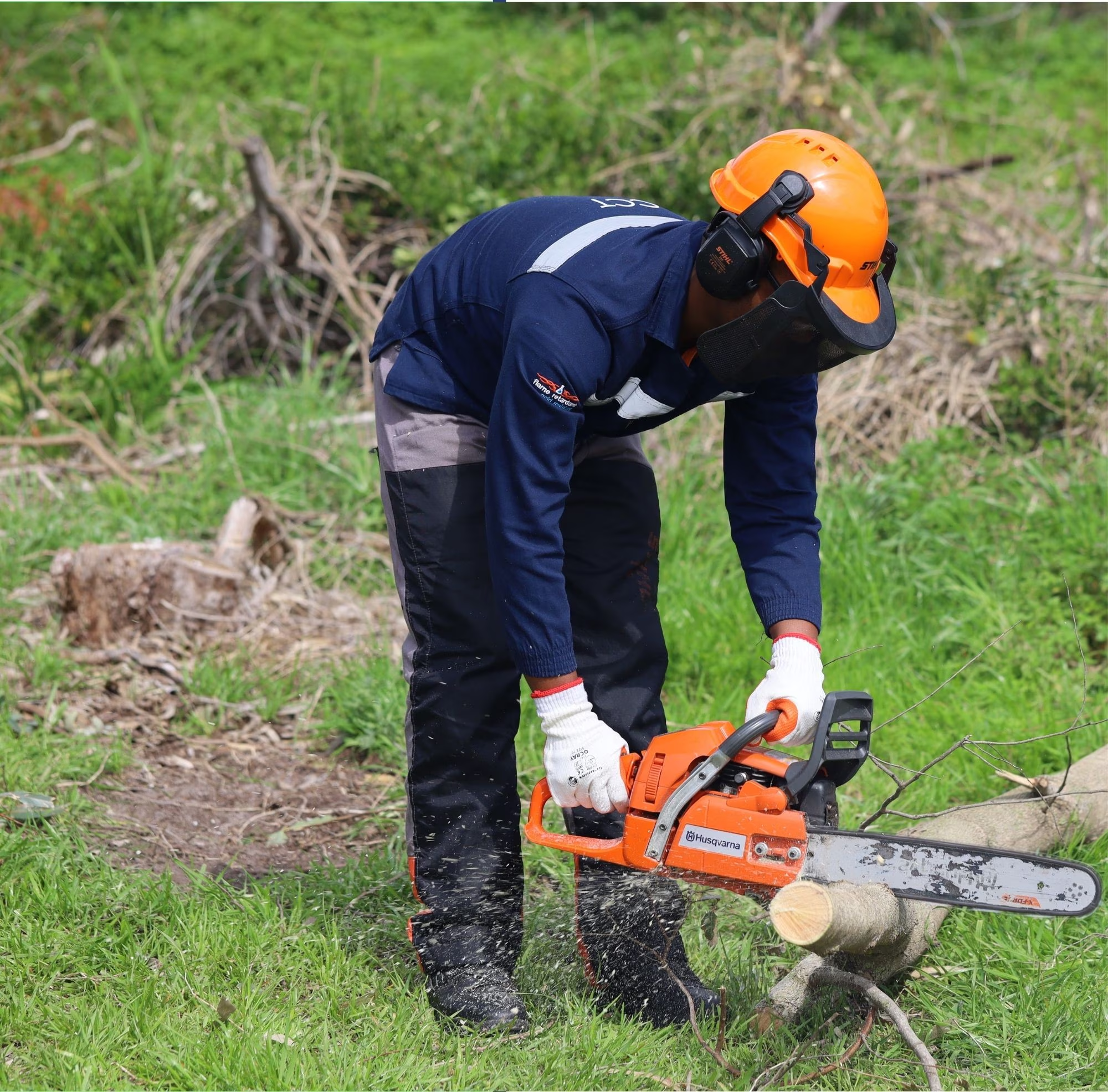
The training was practical: chainsaw operation, first aid, mapping, restoration, basic firefighting. At the time they were simply skills, and they turned out to be the requirements listed on the job she holds today.
She moved into a permanent position with the City of Cape Town, and that security opened another door: a bachelor’s degree in Environmental Management, completed in September 2024.
Today she is a field ranger at Helderberg Nature Reserve, where trail maintenance, environmental education and mammal surveys fill the week. Part of her work is protecting the silver trees at Silver Kloof, a species that grows almost nowhere else on Earth.
Stories like hers are why we measure this work by what the training makes possible.
For employers and land-based organisations
If your people work outdoors, they carry risk and they need competencies signed off. We train teams on site or at our training sites, with a minimum group size of ten. If you manage land and could host a placement, that is the other conversation we would like to have.
Fire season readiness
Basic fire fighting over two days, taking a crew to the point where they can contribute to suppressing a wildfire. Book it before the season starts.
Best for: farms, estates, schools, camps, NGOs and conservation sites.
Enquire
Land maintenance and vegetation
Brush cutter and chainsaw operation and herbicide application, two days each and taught as one bundle, so a crew returns able to work safely and maintain its own equipment.
Best for: garden services, landscapers, estates, property managers, alien clearing contractors and municipal teams.
Enquire
Soil, water and restoration
River erosion management and trail maintenance over two days each, and conservation in urban landscapes over three. Practical field skills for protecting soil, rivers and managed landscapes.
Best for: farms and landowners, conservancies, river groups, municipalities and environmental contractors.
Enquire
Everything we run
The current schedule, for individuals and for groups. Dates and fees are confirmed when you enquire, and courses run subject to numbers.
Accredited qualifications
National Certificate: Nature Conservation, Resource GuardianshipNQF2 · 121 credits · one year
FET Certificate: Natural Resource Guardianship, TerrestrialNQF4 · 144 credits · one year
Occupational Certificate: Environmental MonitorNQF5 · 102 credits · on request
Skills Programme: Eco RangerNQF4 · 60 credits · on request
Safety and field operations
Basic fire fighting · 2 days
Brush cutter operator · 2 days
Chainsaw operator · 2 days
First aid, levels 1 and 2 · 3 days
Health and safety representative · 2 days
Herbicide application · 2 days
Water safety · 3 days
Snake awareness · 1 day
Handling venomous snakes · 2 days
Land, water and biodiversity
River erosion management · 2 days
Trail maintenance · 2 days
Conservation in urban landscapes · 3 days
miniSASS river health monitoring · 1 day
Plant identification · 1 day
Introduction to sustainability and the green economy · 1 day
Working with people
Conflict management · 2 days
People in conservation · 1 day
Time and stress management · 1 day
CV and interview skills · 1 day
Not every course runs every month. Tell us what you need and we will tell you when it next runs, or put a group together for you.
Not sure which one fits?
Send us a line with a bit about where you are, and we will point you at the right route.
Course names, levels, credits and fees are confirmed at the point of enquiry. Accredited programmes are delivered under CATHSSETA and the QCTO.